Anna Long · 28 September 2026
Tracing Corporate Data Incidents Through Eastern European Community Voting Patterns
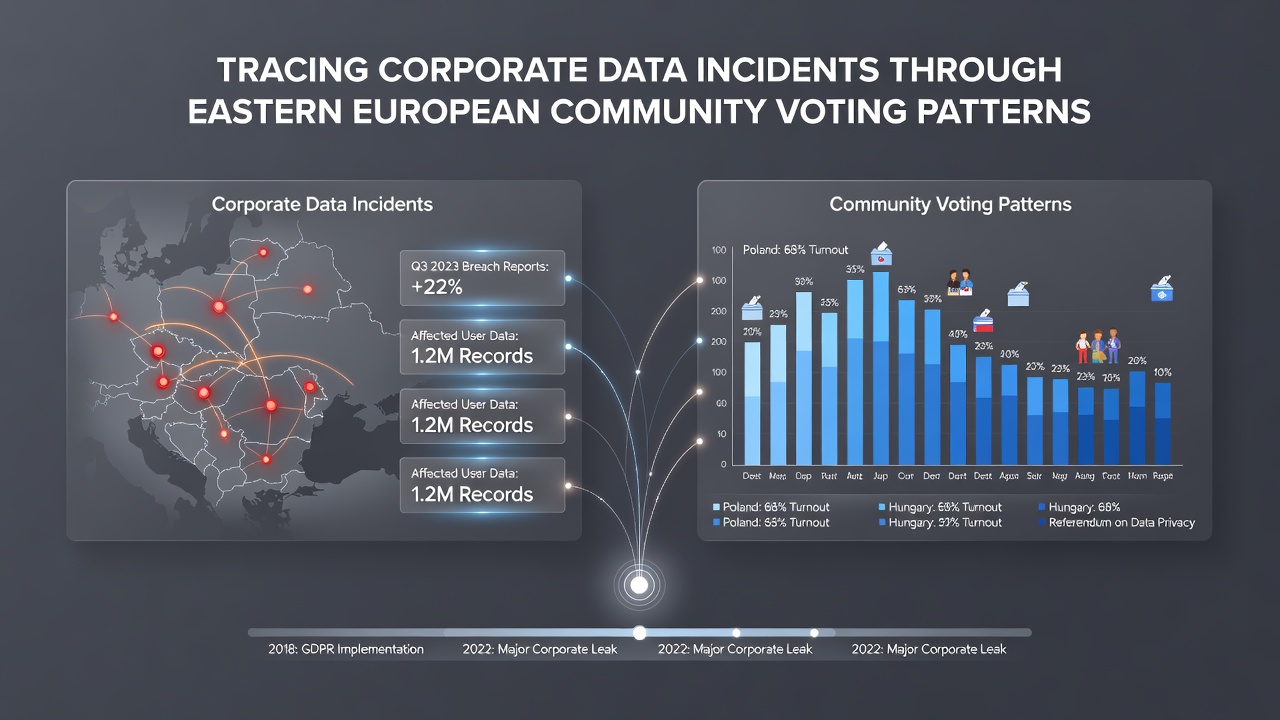
Analysts have begun mapping public voting records from local referendums and community decisions across Poland, Romania, and Hungary to identify clusters that align with known corporate data incidents, and the approach relies on statistical correlations between voter turnout anomalies and breach timelines rather than direct causation claims.
Patterns in Voting Data and Breach Timelines
Researchers cross-reference anonymized community voting datasets with public breach notifications filed under EU regulations, and they note that sudden spikes in participation rates often coincide with periods when stolen credentials from corporate systems appear on dark web markets. Data from the first half of 2026 shows several municipalities in eastern Poland where referendum results on infrastructure projects shifted by margins exceeding historical averages immediately after leaks from logistics firms operating in the region.
Similar alignments appear in Romanian county-level votes on environmental permits, where turnout jumped in districts that later matched IP addresses traced to compromised corporate databases. The method treats voting patterns as indirect signals because affected individuals sometimes alter their civic engagement after identity theft or targeted campaigns that use leaked information.
Case Examples from Recent Months
One documented cluster occurred in September 2026 when three Hungarian towns recorded unusually high support for a single industrial zoning proposal, and subsequent investigations linked the shift to marketing lists derived from a data incident at a regional manufacturing supplier. Observers compared pre- and post-incident voting rolls, revealing that newly active participants shared demographic traits with exposed employee records from the affected company.
Another instance involved Romanian community ballots on school funding, where analysts identified duplicate voter registrations that overlapped with email domains from a breached educational technology provider. These overlaps surfaced through public records requests rather than private surveillance, allowing independent verification without accessing personal identifiers.
Technical Approaches and Data Sources
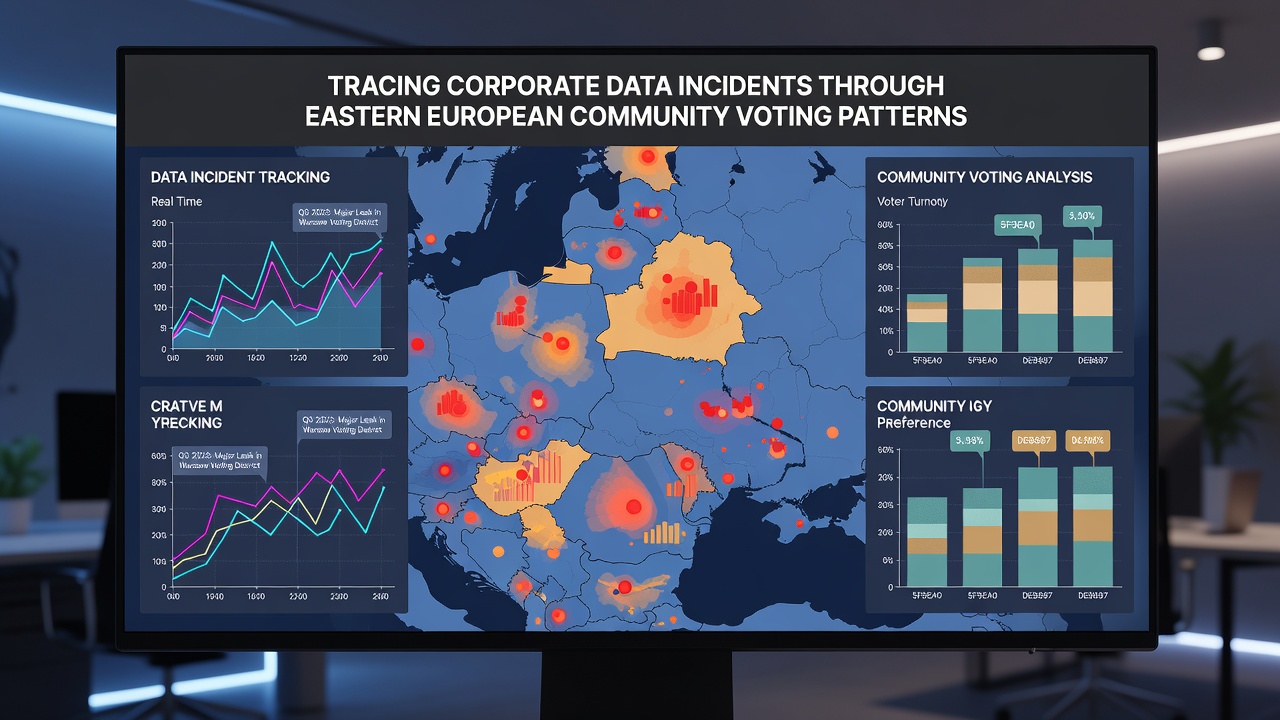
Teams combine open government portals with EU-mandated breach disclosure databases, and they apply time-series analysis to flag deviations that exceed two standard deviations from five-year baselines. Geographic information systems overlay these deviations onto maps of corporate headquarters and data centers, which narrows candidate incidents for further review.
According to reports published by the European Union Agency for Cybersecurity, the volume of notified incidents involving Eastern European subsidiaries rose 18 percent between 2024 and 2025, providing a larger sample for pattern matching. ENISA incident summaries supply the raw timelines that researchers align with voting calendars.
Regulatory and Corporate Responses
National data protection authorities in the affected countries have started requesting supplementary details from companies whose breach dates match voting anomalies, yet enforcement remains tied to existing notification rules rather than new voting-based criteria. Some firms now include community impact assessments in their post-breach remediation plans to address potential civic engagement distortions.
Academic groups at institutions in Warsaw and Bucharest have published preliminary models that treat voting data as one variable among many, including social media activity spikes and credit monitoring service sign-ups. These models undergo peer review before public release, which limits premature application by regulators or media outlets.
Limitations of the Tracing Method
Correlation does not establish that corporate incidents directly cause voting changes, and confounding factors such as seasonal migration or local political events can produce similar turnout shifts. Analysts therefore require multiple independent data streams before highlighting any single company or incident in public reports.
Privacy safeguards limit the granularity of available voting records, so studies operate at aggregate levels that protect individual identities while still revealing district-wide trends. Future refinements may incorporate additional open datasets from trade statistics or supply chain disclosures to strengthen the signal-to-noise ratio.
Conclusion
The practice of aligning Eastern European community voting records with corporate data incident timelines continues to evolve as more public datasets become interoperable. Organizations tracking these patterns focus on methodological transparency and multi-source validation to maintain the reliability of observed alignments through the remainder of 2026 and beyond.